Council Tax Reduction schemes in 2027: The factors to consider

Zoe Charlesworth Published on 02nd February 2026
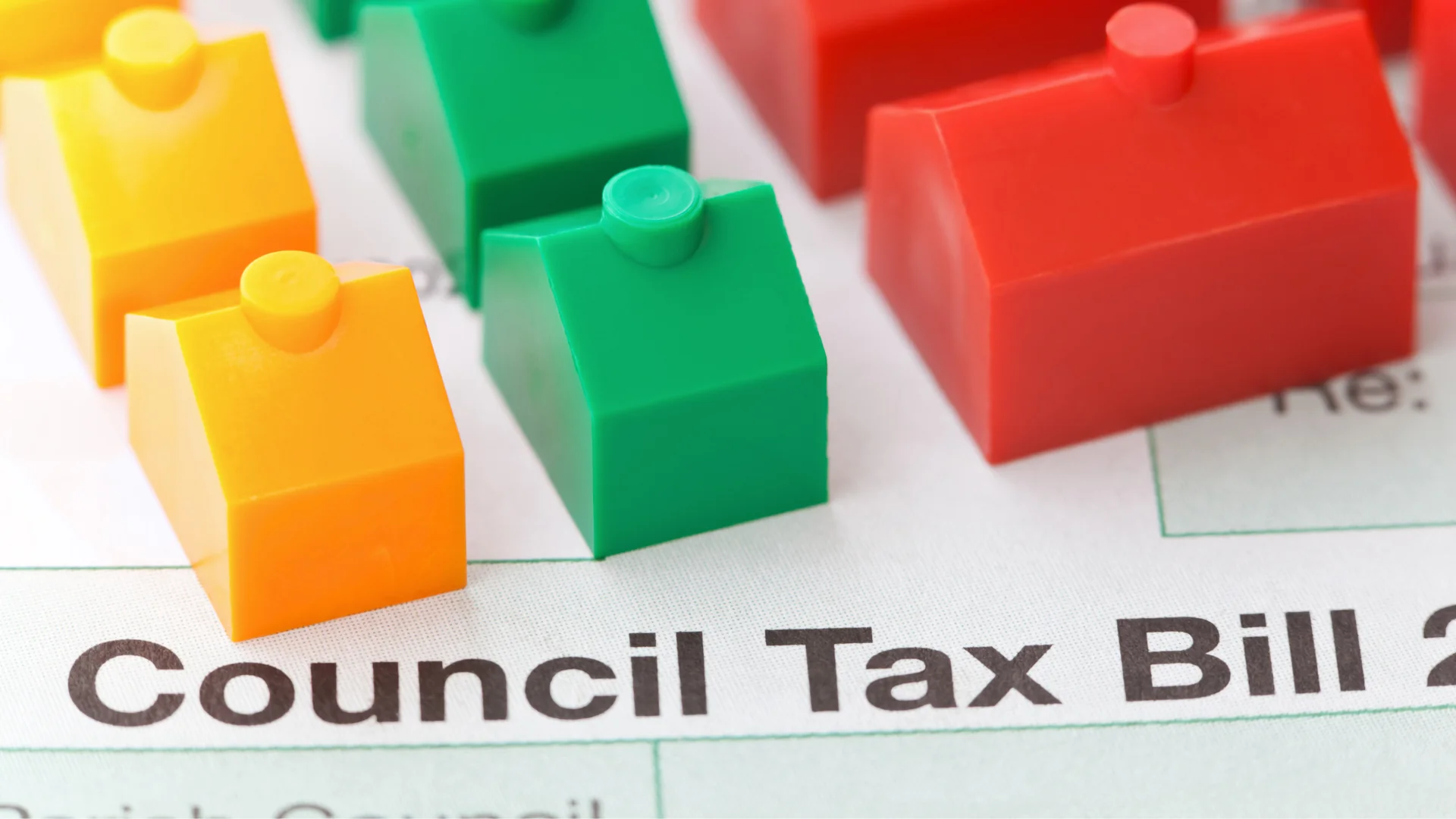
As we move into 2026, Council Tax Reduction (CTR) schemes remain a vital tool in supporting households experiencing poverty. The design of these schemes is one of the most powerful levers available to councils to protect low income residents and mitigate financial hardship within their communities.
A number of recent and forthcoming developments mean that our CTR trends report, first published in 2025, is even more relevant today. The core findings and recommendations remain relevant, and have fed into CTR scheme changes coming into effect in April 2026.
However, councils considering changes to schemes for 2027 will need to consider the changing policy landscape in 2026, which introduces new challenges and opportunities that councils will need to consider as they review and refine their CTR schemes in the year ahead.
Some of the new factors that councils need to consider include:
1. Removal of the two child limit (effective from April 2026)
The removal of the two child limit will have significant implications for Council Tax Reduction schemes. Councils operating schemes based on the default model are likely to see increased caseloads and may wish to proactively identify and contact households that newly qualify for support.
In contrast, councils with banded schemes that take Universal Credit income into account may experience reduced caseloads as household incomes increase for some families. These councils may wish to review and adjust income bands to ensure that the financial gains from lifting the two child limit are fully passed on to households.
2. Child Poverty Strategy
The government’s Child Poverty Strategy, Our Children, Our Future: Tackling Child Poverty, rightly recognises the central role of Council Tax Reduction in tackling child poverty. As part of the strategy, statutory guidance will be issued requiring councils to take account of the circumstances and needs of vulnerable families when designing their council tax support schemes. The aim is to ensure schemes actively contribute to poverty reduction.
3. Supportive collection practices
The Child Poverty Strategy also emphasises the importance of supportive, rather than punitive, collection approaches. Non-statutory guidance will set out government expectations and best practice for supporting vulnerable families in debt. Given the close link between CTR and Council Tax arrears, councils are likely to need to review their CTR schemes to ensure they align with collection practice objectives.
4. The new Outcomes Framework for Local Government
The framework will require public authorities to actively consider socio-economic disadvantage and how their strategic decisions might help to reduce inequalities. The design of Council Tax Reduction schemes will be a key component in demonstrating compliance with this requirement.
5. Universal Credit Act 2025 (effective from April 2026)
The Act introduces reduced Universal Credit support for individuals unable to work due to illness and links entitlement more closely to receipt of disability benefits. This narrowing of eligibility for illness-related support may mean that some CTR schemes no longer provide enhanced support or alternative collection pathways for people who are ill but not in receipt of disability benefits.
6. Timms Review of disability benefits
The Timms Review, expected to conclude in Autumn 2026, may lead to changes in eligibility for disability benefits. As most councils use receipt of disability benefits as a proxy for vulnerability and enhanced CTR awards, any changes could have significant implications for scheme design and risk leaving some highly vulnerable residents without adequate support.
7. Changing funding (and demand) landscape for local authorities
The Fairer Funding review includes proposed changes to local government funding that will no doubt have an impact on council tax scheme generosity, if not scheme design. The changes include an increase in finding in both cash and real terms, but with more deprived areas outside of London benefiting, while better off parts of the UK, notably shire counties, expect to be squeezed.
8. Local government reorganisation (LGR)
County councils expecting to become one or more unitary authorities will want to harmonise CTR schemes before changes come into effect, in order to encourage districts to work together, begin to bring data and systems together and minimise the fiscal impact ahead of LGR.
Understanding the impact of CTR scheme design is therefore essential as councils plan for 2027 and beyond. Robust modelling of both household impact and cost is a crucial step in considering change.
We are pleased to continue working with councils, particularly those redesigning schemes in the context of local government reorganisation, to provide the evidence needed to balance financial sustainability, effective support for the most vulnerable residents, good practice, and compliance with the wider objectives of both local and central government.
Join our free webinar on Council Tax Reduction in 2026: Practical approaches to policy reform and supporting the most vulnerable
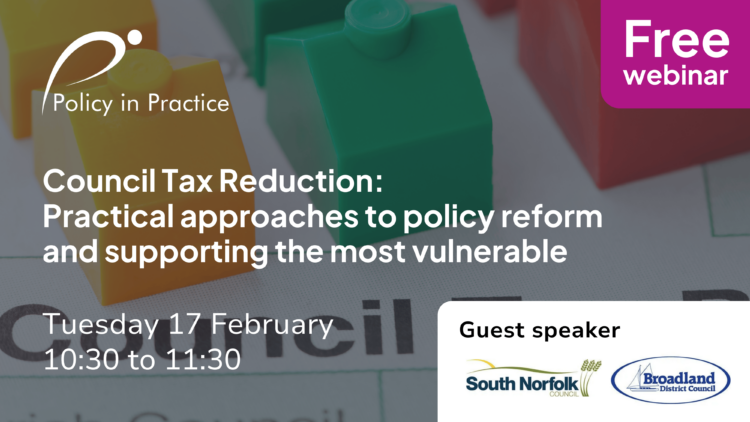
Register to discuss the impact of policy changes with us and hear practical approaches to scheme design based on our analysis of schemes for over 150 councils.
We will also be joined by Lindsay Sayer, South Norfolk and Broadland Councils, who will share her experience of CTRS redesign and harmonisation across the districts.